
Portugal's new citizenship law in 2026: what is changing?
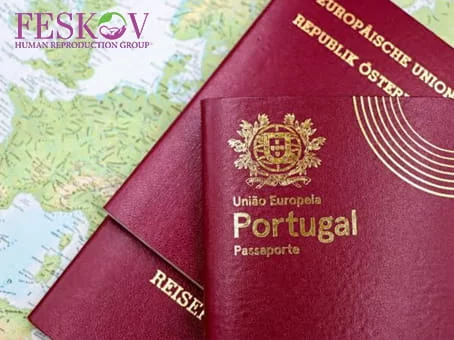
In 2026, Portugal made substantial changes to its citizenship legislation. These changes affect not only people living in the country but also their children.
- Portugal's new citizenship law in 2026: what is changing?
- Portuguese nationality for children: who qualifies?
- The new Portuguese nationality law: how the application process works
- Processing times and costs for children's Portuguese nationality
- How FHRG can support families applying for Portuguese nationality for their children
- Children born through surrogacy
- Children born in Portugal
- Children born abroad
- Children of Portuguese citizens
- Portuguese nationality for children of naturalised citizens
- Documents needed to obtain Portuguese nationality for children
The new requirements determine the conditions for obtaining Portuguese nationality through naturalisation, birth, descent and other grounds. Parents planning to secure Portuguese citizenship for their children therefore need to take the new rules into account.
If this applies to your family, this article explains the new Portuguese citizenship law and how it may affect different family circumstances.
Portugal's new citizenship law in 2026: what is changing?
The main law governing Portuguese nationality is Law No. 37/81 of 3 October, known as the Nationality Law (Lei da Nacionalidade). In May 2026, it was amended by Organic Law No. 1/2026 of 18 May, which entered into force on 19 May 2026. The amendments tightened certain conditions for obtaining nationality. In practical terms, the main changes are as follows:
- For a child born in Portugal to foreign parents to qualify for nationality by birth under the relevant provisions, one parent must have been legally resident in the country for at least five years at the time of birth. Separate statutory requirements apply to the naturalisation of minors born in Portugal.
- Anyone planning to move to Portugal and have a baby there should no longer assume that birth on Portuguese territory alone will confer citizenship.
- When citizenship is sought for a child born in Portugal, the parents' circumstances and the legal requirements applicable to the minor are taken into account.
- If a child has reached the age of criminal responsibility, relevant circumstances that could prevent the acquisition of nationality may be examined.
- For adult naturalisation, some applicants must now have lived in the country for longer. Additional criteria relate to knowledge of the language, history, culture, fundamental rights and duties in Portugal, alongside other statutory requirements.
Obtaining Portuguese nationality may therefore take longer and require applicants to satisfy additional conditions, depending on the legal basis of the application.
Portuguese nationality for children: who qualifies?
It is useful to consider three main situations when looking at citizenship for children.
Children born through surrogacy
For a child born through surrogacy, the first steps are to register the birth and establish paternity. If one legally recognised parent is Portuguese, the child may qualify for Portuguese nationality by descent through that parent. If both parents are foreign nationals, the general nationality rules apply.
Children born in Portugal
This group includes children born through programmes involving delivery in Portugal. Birth on Portuguese territory does not, by itself, guarantee automatic nationality in every case. Portugal combines nationality by descent with limited elements of nationality by birthplace, subject to statutory conditions.
For children of foreign nationals to qualify through certain routes, a parent must satisfy the applicable residence conditions at the time of birth. The authorities review the parents' status, the child's registration at the competent civil registry office (conservatória) and any legal impediments, among other matters.
Children born abroad
If a child is born outside Portugal and one parent is a Portuguese national, the child may qualify for nationality by descent. The birth must be entered in the Portuguese civil register.
Depending on the circumstances, registration may take place through the civil registration authorities or a Portuguese consulate. Failure to register immediately does not necessarily mean the right to nationality is lost, but additional formalities and proof of parentage may be required.
Children of Portuguese citizens
If one parent already holds Portuguese nationality when the child is born, the child may qualify for citizenship by descent. Neither the child's place of birth nor the second parent's nationality is, in itself, an obstacle.
Each situation has its own requirements, so the applicable legal basis must be identified in every case.
Portuguese nationality for children of naturalised citizens
Two situations must be distinguished. The first concerns children born before a parent acquired Portuguese nationality.
If neither parent was Portuguese at the time of the child's birth, a parent's subsequent naturalisation does not automatically confer Portuguese nationality on the child. The relevant legal route must be identified and its requirements checked.
The second concerns children born after a parent became Portuguese. In that case, nationality by descent is generally more straightforward. The birth must be registered and documents supplied to prove the parent's nationality and the parent-child relationship.
The new Portuguese nationality law: how the application process works
Here is how the procedure may work under the 2026 rules.
- Check eligibility. First, establish whether the child meets the requirements for Portuguese nationality, including any steps needed to regularise the child's legal status. Relevant circumstances include whether one or both parents are Portuguese, whether the child was born in Portugal to foreign or stateless parents, or whether the child was born abroad to at least one Portuguese parent.
- Review the documents. Check the birth certificate and parents' identity documents, their residence status in Portugal, whether the birth has been entered in the Portuguese civil register, and, where relevant, how long they had been legally resident on the date of birth.
- Prepare and submit the application. If the child meets the legal conditions, complete the appropriate application and collect the supporting documents. Foreign documents may need legalisation or an apostille and, if not in Portuguese, a certified translation. Depending on the case, applications are submitted to the competent registry office, the Central Registry Office (Conservatória dos Registos Centrais) or a Portuguese consulate.
- Examination and decision. The authorities check legal compliance, the authenticity and validity of documents, and civil registry information. They also assess whether all legal requirements are met and whether any barriers to granting or acquiring nationality exist.
If all conditions are met, the child may be granted or acquire Portuguese nationality, depending on the applicable legal grounds.
Documents needed to obtain Portuguese nationality for children
The required documents depend on the child's particular circumstances. The following table gives common examples:
| Situation | Documents required | Notes |
|---|---|---|
| One parent has Portuguese nationality | Child's birth certificate, evidence of the parent's Portuguese nationality and both parents' identity documents | If the child was born abroad, the birth must be recorded in the Portuguese civil register according to the applicable procedure. |
| Both parents of a child born in Portugal are foreign nationals | Birth certificate and documents establishing the parents' residence status and length of stay in Portugal | The statutory residence requirements must have been met when the child was born. |
| The child was born before a parent acquired Portuguese nationality | Birth certificate, parents' identity documents and proof that the parent acquired Portuguese nationality | Further documents may be required depending on the legal basis of the application. |
| The child was born after a parent acquired Portuguese nationality | Birth certificate, identity documents and evidence of the parent's Portuguese nationality | The procedure also depends on the place of birth and the status of the relevant civil registration. |
This list is indicative. Other documents may be needed, including residence permits or other residence evidence, marriage certificates, criminal record certificates and proof of parentage.
Processing times and costs for children's Portuguese nationality
Processing times vary considerably by application type, the child's circumstances, the documents provided and the workload of the competent authorities. There is no single time frame for every case.
Costs also vary. Some procedures involve official fees, while others may be free or subject to special rules.
In addition to any administrative fees, families may have to pay for certificates, legalisation or apostilles, certified translations and other steps needed to prepare the application. Current fees and requirements should be checked with the Justice Portal (Portal da Justiça), the Institute of Registries and Notaries (IRN) or a Portuguese consulate.
How FHRG can support families applying for Portuguese nationality for their children
If you need to apply for Portuguese nationality for a child born through a surrogacy programme, FHRG can help prepare the application. Its specialists assess each case individually and identify the most suitable procedure.
This may help reduce documentation or procedural errors that could delay the process, particularly in light of the requirements introduced by the new nationality law. The team assists at every stage and helps prepare, legalise, certify and translate documents in accordance with the rules applicable in Portugal.
- Surrogate motherhood - how not to be deceived
- The cost of parenthood: an overview of reproductive programs from leading clinics
- Advantages of guaranteed surrogacy programs over programs with guaranteed compensation
- Guarantee Remote Surrogacy Programs at FHRG
- Portugal allows Surrogacy for medical reasons
- Surrogacy: who is legally recognised as the mother in Portugal?
- Surrogacy in Brazil: costs, legal status and how the process works
- Tests during pregnancy: medical care in a surrogacy programme

 subscribe
Join my mailing list to receive the latest news and updates

What is Portugal's new citizenship law in 2026?
read moreIt is based on the amendments introduced by Organic Law No. 1/2026 of 18 May, which changed the rules for granting and acquiring nationality.Does the new Portuguese citizenship law apply to children of naturalised citizens?
read moreYes. The procedure depends on when the parent acquired nationality and on the child's date and place of birth.Do children of naturalised citizens automatically become Portuguese?
read moreNot necessarily. If the child was born before the parent was naturalised, the applicable legal basis must be checked.Can a child born outside Portugal obtain Portuguese nationality?
read moreYes. If one parent is Portuguese, the child may qualify for nationality by descent.How long does it take to obtain Portuguese nationality for a child?
read moreThere is no fixed period. It depends on the type of application, the documents and how the case is processed.

The reproduction of any information presented on the site in whole or in part, in any text, graphics or video format is prohibited without the permission of the site administration. By copying the data, you agree to this requirement and assume full responsibility in the event of its violation.
© 1995 - 2026 SURROGATE MOTHERHOOD CLINIC OF PROFESSOR FESKOV in coopertion with Alpha Group Ltd