
How Surrogacy Affects Relationships: Family and Bond Psychology in 2026
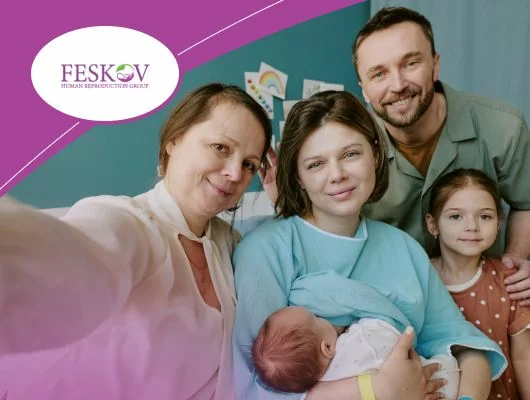
In 2026, reproductive psychology recognizes that surrogacy is not only a medical protocol but also a profound social experience that reshapes family structure.
- Relationship Dynamics Within the Couple: A Shared Project, Not Parallel Experiences
- Surrogacy Involving a Family Member: Trust, Boundaries, and Legal Necessity
- How Surrogacy Affects the Child: What Science Says
- When and How to Tell a Child: Honesty as Protection
- Relationships with the Surrogate Mother After Birth
- Extended Family: How to Explain It to Grandparents
- Psychological Readiness Checklist for Surrogacy
A couple may spend years reaching this decision. A partner who has no genetic link to the child may struggle with how to process that reality. A sister may agree to carry her nephew. A child will eventually ask questions. And these changes require preparation.
Relationship Dynamics Within the Couple: A Shared Project, Not Parallel Experiences
For many couples, surrogacy becomes the first experience where they truly function as a team – not individually, but together, with divided roles and a shared goal. This can strengthen the relationship, but it can also reveal issues that were previously unnoticed.
One of the most common sources of tension is the “biological gap”: the partner who does not have a genetic connection to the child or does not experience pregnancy directly may feel like an observer of someone else’s process. This is a normal psychological response, but it should be addressed early rather than left to develop into emotional distance. In practice, the more actively the non-gestational partner is involved – attending ultrasounds, communicating with the coordinator, participating in decisions – the faster a sense of full parenthood develops.
It also helps reduce the feeling of a “biological gap” in the future when the child resembles one of the parents. For this reason, in programs using donor oocytes, donors are selected of various ethnicities and with phenotypic characteristics similar to those of the intended parents.
From the perspective of psycho-emotional dynamics, surrogacy for single women and men does not involve complex interpersonal issues during the program itself, but it does not eliminate the emotional anticipation or the future conversation with the grown child.
It is very important not to turn the entire waiting period into a “results-only mode.” Couples who maintain space for their relationship outside the context of the program – shared time, everyday conversations, intimacy – go through this journey significantly more easily. When tension increases, it is advisable not to postpone consulting a family psychologist; it is better to do so preventively rather than in a moment of crisis. Single individuals awaiting a child can greatly benefit from the support of friends and family, as well as consultations with a reproductive psychologist.
Surrogacy Involving a Family Member: Trust, Boundaries, and Legal Necessity
 Intrafamilial surrogacy is one of the most emotionally complex formats of the program. A sister carries a child for her brother and his partner. A close friend carries for a couple she has known for twenty years. A mother carries for a daughter with a removed uterus. These scenarios exist, and they often involve genuine goodwill and emotional closeness.
The advantages are clear: lower overall surrogacy program cost, a high level of trust, transparency regarding the surrogate’s lifestyle, and shared joy experienced within the family. However, this is also where some of the least anticipated difficulties tend to arise.
Main Risks of Intrafamilial Surrogacy:
- “Blurred boundaries” – who makes decisions during pregnancy when the surrogate is a relative? Who has authority over nutrition, lifestyle choices, and medical procedures?
- “Perpetual debt” – the feeling that intended parents now owe the relative everything indefinitely, which can create chronic tension within relationships.
- Role displacement – especially in cases where the surrogate is the intended mother’s own mother: biologically and legally, this creates dynamics that must be carefully addressed in advance.
The Only Effective Solution: legal structure and psychological support.The only reliable approach is a formal legal agreement and psychological support, even between the closest relatives. In such cases, a contract does not exist to signal distrust – it exists to prevent misunderstanding. It defines boundaries clearly and removes emotional ambiguity from future conversations.
How Surrogacy Affects the Child: What Science Says
The question of how surrogacy affects a child is one of the most sensitive for intended parents and one of the most extensively studied in reproductive psychology. The Cambridge Centre for Family Research, under the leadership of Professor Susan Golombok, has conducted large-scale longitudinal studies – and their findings consistently challenge the most common fears.
Children born via surrogacy do not differ in levels of mental health, self-esteem, or social adaptation from peers born through natural conception. Moreover, research shows that these children often develop even closer emotional bonds with their parents – likely because their parents approached parenthood more consciously, having pursued it after a long and deliberate journey.
As for the perception of the surrogate mother, children who are told the truth early in life typically view her as a “special adult” or “kind woman who helped us meet,” rather than as a second mother. With appropriate disclosure, no identity conflict arises.
When and How to Tell a Child: Honesty as Protection
The 2026 trend in European surrogacy practice and reproductive psychology is clear and unambiguous: early and honest disclosure of origin is essential for a child’s healthy self-esteem in the future. Adolescents who learn the truth accidentally or late often experience it as betrayal. Those who grow up hearing their origin story from early childhood tend to perceive it as normal – and even meaningful.
Practical approaches that work:
- illustrated children’s books explaining surrogacy in simple language;
- a “family story” told gradually from around age three or four;
- photographs from the process – ultrasounds, hospital moments, first hours – as part of the family album; and
- honest answers to questions as the child grow, without unnecessary detail but also without avoidance.
The key is not to wait for the “right moment.” It does not arrive. Disclosure is not a single conversation, but a gradual process that begins long before the child can fully understand it in a literal sense.
Relationships with the Surrogate Mother After Birth
After the birth of the child, intended parents are often faced with an unexpected question: should they maintain contact with the surrogate mother? Should communication continue, and if so, in what form?
The practice of Feskov Human Reproduction Group describes several stable models:
| Model | Description | Suitable for |
|---|---|---|
| Complete termination of contact | No communication after birth | When both parties prefer a clear emotional closure |
| Formal communication | Holiday greetings, occasional messages | For parents seeking a balance between separation and resolving feelings of “permanent obligation” |
| Open communication | Warm ongoing relationship, sometimes meetings | When genuine mutual sympathy has developed |
| Extended family model | The surrogate mother is perceived as a close person | Intrafamilial surrogacy |
The choice of model is best discussed in advance—before the program begins, rather than after birth, when emotions are more intense. The goal is for the surrogate mother not to feel used, and for the parents not to feel dependent. Balance is achieved through honest communication and clear agreements.
Our Customer Service Representatives are eager to help you with whatever you need.
Extended Family: How to Explain It to Grandparents
Older generations often react to surrogacy with confusion – especially in cultures where the topic remains a taboo. In this context, reasoning alone is not the key; gradual inclusion is. The earlier close relatives become part of the process – hearing about stages, seeing ultrasounds, participating in preparation – the more natural the experience feels by the time the child is born.
Surrogacy can become not a source of conflict, but an opportunity to unite the family around a shared anticipation. This requires time and patience, but the experience of intended parents from different countries shows a consistent pattern: relatives who were not excluded from the journey often become the most supportive allies.
Psychological Readiness Checklist for Surrogacy
Before starting the program, honestly answer the following questions:
- Do you have a plan for coping with a possible unsuccessful first attempt?
- Do you have a person (psychologist, friend, support group) with whom you can speak openly?
- Have you agreed on a communication format with the surrogate mother?
- Are you ready to tell your child the truth – and do you know when and how you will do it?
- Do you understand how roles are distributed during the waiting period?
- Do you maintain space for your relationship outside the context of the program?
If most of these questions do not have clear answers, it is not a reason to delay the program – but it is a signal to start building plans before, not during the process.
If you want to go through the program as calmly and comfortably as possible, simply share your preferences with a program manager on our website, and a free detailed plan will be prepared for you.
- Surrogate motherhood - how not to be deceived
- The cost of parenthood: an overview of reproductive programs from leading clinics
- Advantages of guaranteed surrogacy programs over programs with guaranteed compensation
- Egg donation near me
- How the History of Surrogacy Changed Over the Years
- Why I Chose Surrogate Motherhood with Feskov
- Connection between the child and the surrogate mother
- Age limit for surrogacy: international standards
- The First Meeting: 5 Helpful Tips for Surrogates & Intended Parents
- Pregnancy After Miscarriage: Getting Pregnant
- Surrogacy in Ukraine: Legal Aspects
- Women's Age And Fertility
- Alcohol And Fertility: Drinking While Trying To Conceive
- Embryo evaluation: understanding embryo quality assessment
- Historical Changes to Surrogate Laws in Israel
- TOP 5 surrogate clinics in Ukraine
- International Surrogacy Program Ukraine-Canada
- 15 facts about Surrogacy

 subscribe
Join my mailing list to receive the latest news and updates

Can Surrogacy Involving a Family Member Create Tension?
read moreYes, and in fact, family-based surrogacy programs are among the most emotionally complex formats of the entire process. The main sources of tension include blurred boundaries, a sense of “permanent debt,” and role displacement. To minimize these risks, all rights, responsibilities, and roles must be clearly defined in a formal contract. Families are also advised to receive psychological support throughout the program and after its completion.How Should We Talk to Family About Surrogacy?
read moreThe most effective strategy is gradual inclusion of close relatives in the process, rather than presenting it as a final decision or an argument. The earlier family members become part of the journey, the more naturally the experience is perceived by the time the child is born. Start by explaining the medical reasons (this reduces the perception of it being a “personal choice” or “whim”); share positive updates (this builds emotional connection); allow time for adaptation; and provide educational materials. Surrogacy can become not a source of conflict, but an opportunity to unite the family around a shared expectation.What If Partners Cope With Stress Differently?
read moreWhat helps is open communication about how each person feels, without judging coping strategies; dividing roles according to individual strengths; and maintaining space for the relationship outside the context of the program. Red flag: if differences in coping strategies lead to emotional distancing, silence, or conflict, this is a signal not to delay consulting a psychologist specializing in reproductive psychology.Should Couples Attend Psychological Counseling During the Process?
read moreIn 2026, psychological support in surrogacy programs has become a standard of high-quality medical care rather than an optional extra. Many programs include psychological counseling as a basic service throughout the entire process.How Can We Protect Our Relationship During a Surrogacy Program?
read moreDo not turn your entire life into a “waiting-for-results mode.” Agree on a clear distribution of roles. Set boundaries around information flow (for example, once a week through a coordinator) to avoid living in constant anxiety. Limit reading of forums and social media discussions. Speak openly and honestly about your feelings. Actively involve the non-genetically connected partner in the process. Seek help before a crisis develops: if you notice increasing tension, consult a psychologist. Preventive counseling is more effective than crisis therapy.

The reproduction of any information presented on the site in whole or in part, in any text, graphics or video format is prohibited without the permission of the site administration. By copying the data, you agree to this requirement and assume full responsibility in the event of its violation.
© 1995 - 2026 SURROGATE MOTHERHOOD CLINIC OF PROFESSOR FESKOV in coopertion with Alpha Group Ltd